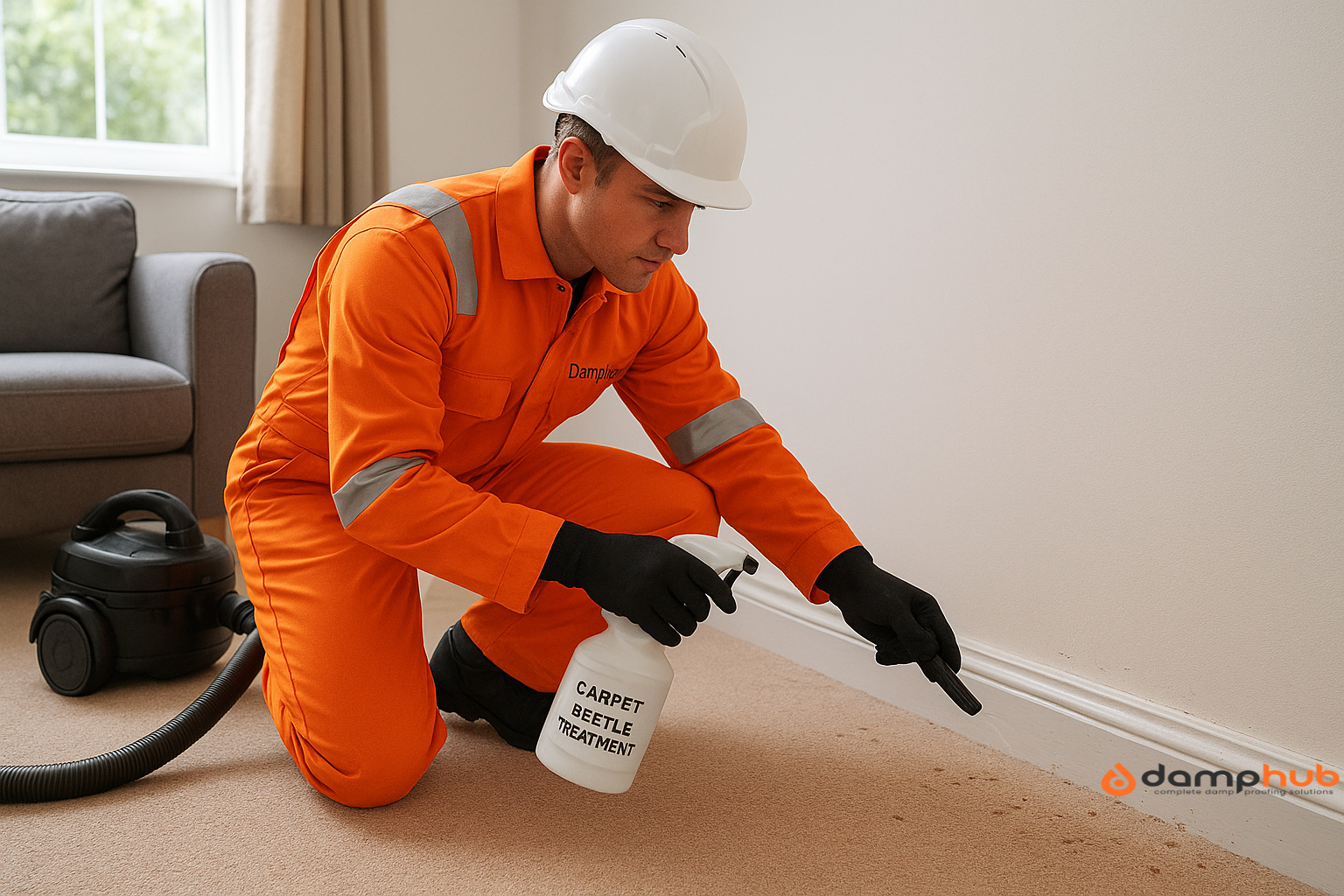
If you’re dealing with carpet beetles, the only thing that matters now is getting proper carpet beetle treatment, not guessing. It’s not about spraying random substances and hoping they work.
The beetles live in carpet edges, wardrobes, furniture joints, and in places you mostly don’t clean. And if you miss a few, they’ll be back in weeks.
This guide walks you through the carpet beetle treatment that works in the UK, how to prep your space, what to avoid, and when to call in a professional.
No sales pitch. No myths. Just clear steps to stop them before you deal with messes in your stuff.
Related article👉: How to Get Rid of Carpet Beetles in the UK
How Do You Know if You Need Carpet Beetle Treatment?
The early signs are subtle — and that’s the problem.
Most people don’t notice until there’s actual damage. And by then, you’re dealing with larvae, not just the occasional adult beetle flying near the window.
Here are the signs of carpet beetles to watch for:
- Shed larval skins: They look like tiny, brown, hairy casings — often mistaken for crumbs or lint. Usually found in corners, drawers, or along skirting boards.
- Holes in clothes or carpets: Especially in wool, silk, cashmere, felt, or feathers. This isn’t moth-style neat damage — carpet beetle holes are more random and jagged.
- Live larvae: Small, brownish, segmented with bristles. About 4mm long, slow-moving, and usually spotted, crawling along the edges of rugs or floorboards.
- Adult beetles: Oval-shaped, often black, brown, or mottled. They’re harmless themselves, but a sign there’s a breeding ground somewhere nearby.
Read more here: 👉 How to Identify and Get Rid of Black Carpet Beetles
Pro Tip:
If you’ve seen larvae or skin casings, treatment isn’t optional — it’s urgent. These pests won’t go away on their own, and they lay eggs fast.
How Do You Prepare For Carpet Beetle Treatment?
Most treatment failures happen because the prep was lazy.
Carpet beetles don’t just live in the carpet. They hide in the places you barely clean — behind skirting boards, under sofas, inside old suitcases, under pet beds.
If you don’t clear out those spots first, the spray won’t touch them, and they’ll survive it.
Here’s what a proper carpet beetle treatment prep looks like:
- Clear the clutter. Especially under beds, sofas, and wardrobes. They love dark, undisturbed corners.
- Vacuum like your life depends on it. Use the nozzle. Get into crevices. Do all floors, all furniture, and every inch of the affected rooms.
- Empty the vacuum immediately. Don’t store it. Bag it, seal it, chuck it outside.
- Wash fabrics. Hot wash anything you can — blankets, cushions, soft toys, curtains. The hotter the better.
- Freeze what you can’t wash. Vintage wool? Bag it up airtight and stick it in the freezer for at least 72 hours. That kills larvae and eggs.
- Move pets and kids out temporarily. You’ll need a clear space before spraying or fogging begins.

Good to Know:
Carpet beetle eggs are sticky, tiny, and resistant to light surface treatments. Proper cleaning is half the job.
What Is The Best Carpet Beetle Treatment?
The “best” treatment depends on how bad the infestation is and where it’s taken hold.
Here’s what actually works:
Insecticide sprays
Choose one with permethrin, cyfluthrin, or deltamethrin. These kill larvae and adults on contact. Use along baseboards, carpet edges, under furniture, and in drawers. But don’t overdo it — you want to spray, not soak.
Fumigation or foggers
These work in enclosed rooms and can help knock out airborne adults and exposed larvae. But foggers don’t always reach deep inside fabric or cracks, so you still need surface treatments too.
Get More info: How to Treat Carpet Beetle Rash
Insecticidal dusts
Diatomaceous earth or silica-based dusts can be puffed into hard-to-reach cracks and floor gaps. They damage the beetles’ outer layer, drying them out over time. Very effective — but messy if used carelessly.
Professional heat treatment
If it’s a large or long-standing infestation, pros can use controlled heat to raise the temperature to fatal levels for larvae, eggs, and adults. Expensive — but fast and chemical-free.
More help here: How to Prevent Carpet Beetle Infestation
Try This:
If you’ve got wool rugs or expensive fabrics, test any spray on a hidden patch first. Some may stain or damage natural fibres.
Avoid This:
Mothballs, essential oils, and vinegar won’t stop a full-blown infestation. They might smell impressive — but beetles aren’t easily bothered.
Is Carpet Beetle Treatment Safe For Pets?
Mostly yes — but only after it’s dry.
Most over-the-counter insecticides are designed for home use and are low-risk once settled. But they’re not safe while wet. And they’re especially risky for cats, birds, and small pets with sensitive respiratory systems.
Keep this in mind:
- Always follow label instructions. If it says pets out for 4 hours, don’t chance it.
- Ventilate treated rooms afterwards.
- Wash pet bedding separately and replace it if needed.
- Never let animals lick, roll, or sleep on freshly treated areas.
Compare pests: Carpet Beetle Larvae vs Bed Bug: How to Spot the Difference
Pro Tip:
Birds are the most vulnerable. If you have parrots, canaries, or similar, move them to a completely different space until you’re certain there are no fumes or residues left.
Should You Hire A Professional For Carpet Beetle Treatment?
If it’s light and local — just a few larvae in one room — you can try DIY first.
But if it keeps coming back… if it’s spread to wardrobes, sofas, multiple rooms… or if you’ve tried spraying and nothing’s worked?
Bring in the professionals.
Here’s why you might need carpet beetle professionals:
- They know where beetles hide (and it’s often not where you’d expect).
- They use stronger products not available in shops.
- They can spot signs of damage you’ve missed — or signs of other pests.
- They can do follow-ups to make sure it doesn’t return.

Good to Know:
A lot of pest control firms will give free quotes — some even include an inspection. And many offer treatment guarantees or return visits if it doesn’t clear.
How Much Does Carpet Beetle Treatment Cost?
Carpet beetle treatment costs vary depending on a few things:
- Number of rooms affected
- Type of treatment (spray vs fog vs heat)
- Whether it’s a one-off or part of a multi-visit plan
Typical UK prices:
- DIY treatment kits: £20–£60
- One-off professional spray: £100–£250 (for 1–2 rooms)
- Whole-house treatment: £300–£600+
- Heat treatment: £500–£1,000+ (for larger infestations)
It’s not pocket change, but compare that to the cost of replacing rugs, sofas, wardrobes, and clothes chewed beyond saving.
What’s The Best Way to Prevent Carpet Beetles After Treatment?
If you’ve just finished treatment, congrats. Now don’t undo it.
Here’s how to manage the pests and keep them out for good:
- Vacuum regularly — especially along edges, under beds, and behind furniture.
- Clean out wardrobes seasonally. Check anything you haven’t worn in a while.
- Store natural fibres properly. Use airtight containers or garment bags for wool, silk, or vintage items.
- Wash pet bedding often. It’s a magnet for larvae.
- Seal entry points. Adult beetles often come in through cracks around windows and doors.
- Avoid leaving dead insects or spiders around — larvae will eat them.
Try This:
Pop a few sticky traps near window sills and in corners — they’re great for spotting adult beetles early.
Our other guide👉 How to Prevent Carpet Beetle Bites?

Final Thought
Carpet beetles won’t cause a scene — they’ll just ruin your stuff in the background. If you don’t treat it properly the first time, they’ll be back.
Vacuum hard. Spray right. Clean deep. Or pay for it later.
That’s the choice.
Carpet Beetle Treatment: Frequently Asked Questions Answered

-
What is the best solution for carpet beetles?
You’ve got to clean, like seriously, and then hit them with something that kills. Start by vacuuming every dusty, dark edge you can find — under furniture, around skirting boards, behind the radiator.
Then spray a proper insecticide. Not the flowery ‘pet-safe’ ones — you want one that says it sticks around and kills larvae after they hatch.
Pro Tip: Skip this step or do it half-heartedly, and you’ll be back in three weeks watching new ones crawl out like you never tried.
-
How long does it take to fully get rid of carpet beetles?
If you’ve caught it early, maybe three weeks. If they’ve had time to lay eggs in rugs, behind your bed, and inside your slippers?
Easily six weeks or more. These things don’t just die because you cleaned once — the eggs hatch in batches, so you’ll need to keep at it with repeat sprays and hoovering.
Good to Know: Just because you haven’t seen a beetle in a week doesn’t mean they’re gone. Wait too long, and boom — fresh wave.
-
Where to spray vinegar for carpet beetles?
Vinegar won’t kill them, but it messes with their senses.
Wipe it along skirting boards, shelf edges, inside drawers — anywhere they might crawl or sniff around for nesting spots.
Think dark corners, dusty spots, places your hoover misses unless you’re really trying.
Try This: White vinegar + water mix, sprayed along floor edges and inside wardrobes. Avoid fabrics — vinegar’s not gentle on everything.
-
How do you kill carpet beetles with homemade spray?
Short answer? You don’t. But you can make life harder for them.
A mix of vinegar and clove or peppermint oil will keep them off certain surfaces. It won’t kill eggs or larvae, but it can drive adults away from laying more.
Here’s a quick mix:
– 1 cup white vinegar
– 1 cup water
– 10–15 drops clove or eucalyptus oilSpray along hard surfaces and cracks. Don’t use on anything fancy — vinegar’s acidic.
Heads up:
Homemade sprays are great as backups. Not so great if you’ve already got chewed curtains.
-
Will alcohol spray kill carpet beetles?
Yes, but only if you hit them directly.
A proper blast of isopropyl alcohol can kill larvae on contact, but it won’t reach anything hiding in the carpet pile or deep in a blanket. It’s a quick fix, not a full one.
Warning: Alcohol is flammable and a bit harsh on furniture. Use it with the windows open, and maybe don’t spray it near the cat.
-
How to treat a room for carpet beetles?
Anything natural and undisturbed. Wool rugs. Forgotten jumpers. The fluff under your bed you meant to hoover six months ago.
They love keratin, found in fur, feathers, leather, and even hair. If you’ve got pets or vintage clothes, you’re basically running a buffet.
Good to Know: Adults like the light and show up near windows. Larvae? They’re the real problem — and they stick to the shadows.