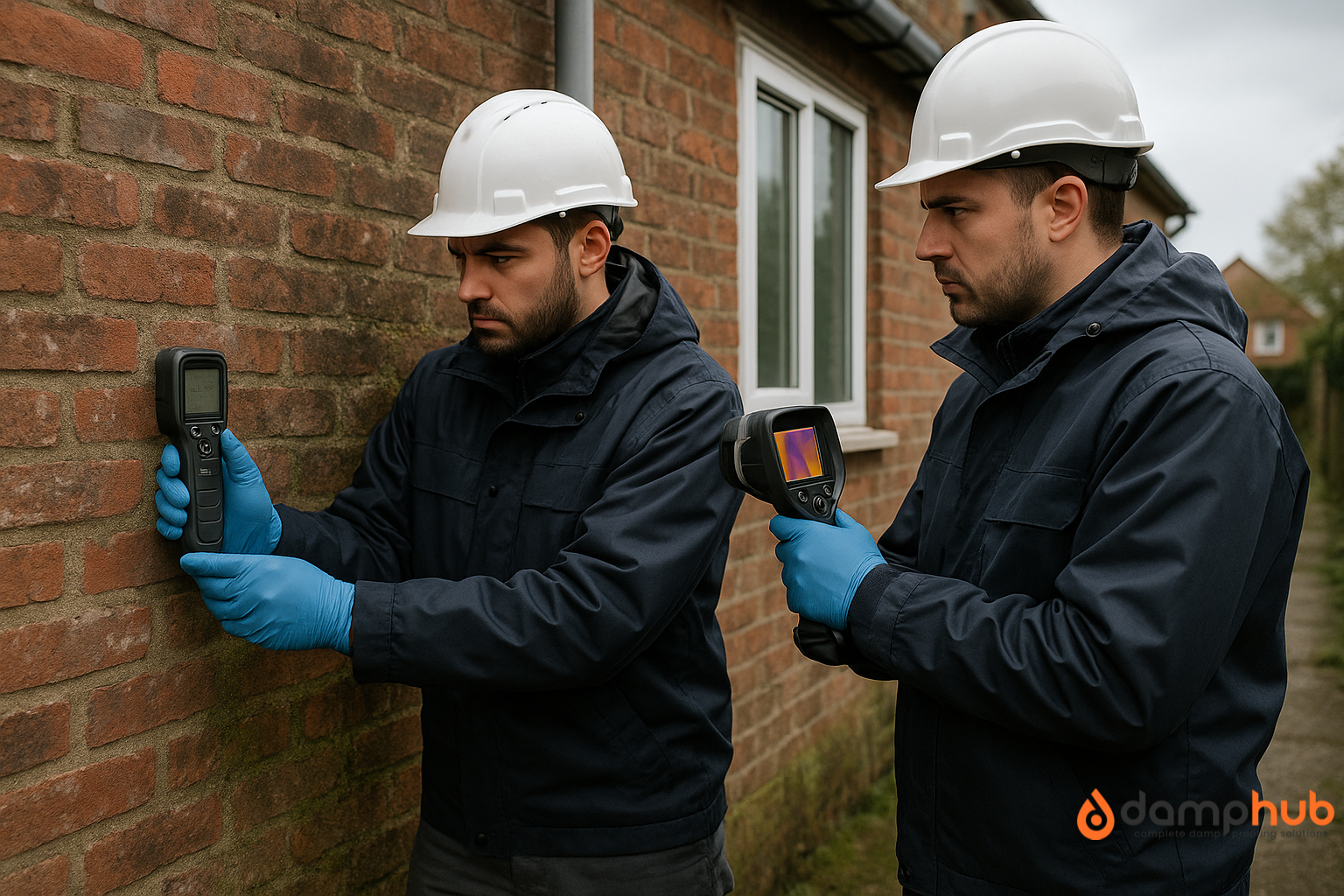
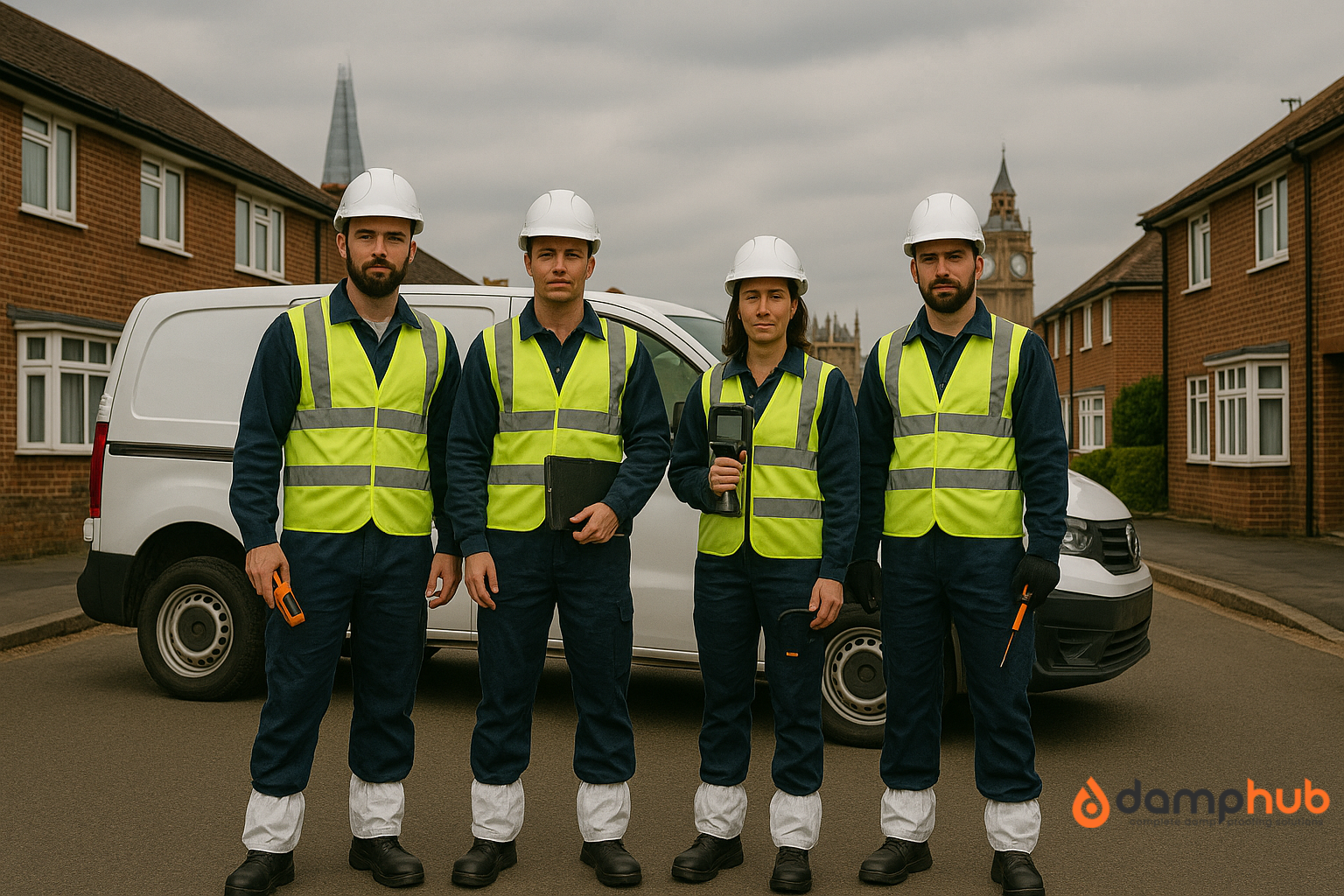
A damp survey is a specialist inspection that identifies moisture-related problems in a property. It doesn’t just confirm whether damp is present — it pinpoints the type, the cause, and the best way to put it right.
Why does this matter? Because damp isn’t just unsightly. Left unchecked, it can weaken walls and timbers, damage plaster, lower indoor air quality, and even trigger health issues. An incorrect diagnosis can result in wasted money on ineffective treatments, leaving the underlying problem unresolved.
That’s why damp surveys should only ever be carried out by trained professionals with recognised qualifications. In this guide, we’ll look at who can do them, the qualifications to check for, and why choosing the right expert protects both your property and your wallet.
The Importance of a Damp Survey
Prior to discussing who can perform a damp survey, one needs to comprehend its significance.
There are various types of damp, such as rising damp, penetrating damp, condensation, and plumbing system leaks.
All of these have varying causes and remedies. An incorrect diagnosis may result in the wrong treatment, wasted money, and continued damage.
The best damp survey companies in London assist with:
- Identifying the origin and extent of the damp issue.
- Determining the nature of the damp problem in the property.
- Suggesting the relevant remedial actions.
- Supplying the documentation that is essential for legal or insurance reasons, particularly on the sale of the property.
Due to these considerations, it is essential that the survey is carried out by an experienced and competent professional.
Who Can Carry Out a Damp Survey? Professionals Trained to Conduct Damp Surveys
The following are the main categories of experts trained to carry out damp surveys:
1. CSTDB (Certificated Surveyor of Timber & Dampness in Buildings)
This is the current industry qualification awarded by the Property Care Association (PCA).
It replaced the older CSRT (Certified Surveyor in Remedial Treatment), which many experienced surveyors still hold.
CSTDB surveyors are trained to:
- Diagnose rising damp, condensation, timber decay, and woodworm.
- Understand building construction and how moisture moves through structures.
- Recommend safe, effective remedial treatments.
If you see “CSRT” on a surveyor’s profile, it usually means they qualified before the transition to CSTDB — both remain well recognised.
2. Chartered Building Surveyors (RICS)
Chartered Building Surveyors, usually members of the Royal Institution of Chartered Surveyors (RICS), are also qualified to carry out damp assessments.
They may not specialise exclusively in damp, but they are trained to:
- Provide a broad, unbiased assessment of the property’s condition.
- Recognise signs of damp within the wider context of a building survey.
- Advise if a specialist damp survey is required.
RICS surveyors are often commissioned during property purchases, when buyers want assurance about the overall condition of a house.
3. Damp Proofing Specialists
Many damp proofing companies offer their own surveys, sometimes free of charge, sometimes paid. These can be useful, but homeowners should be cautious:
- Always check that the surveyor holds a recognised qualification (CSTDB or CSSW, where relevant).
- Look for membership of the PCA or other professional trade bodies.
- Be aware of potential conflicts of interest — some “free surveys” are more like sales visits, with limited diagnostic value.
A reputable firm will provide a proper inspection and a written report backed up by evidence, not just a sales pitch.

👉 Must read: How to Treat Damp Walls Internally: A Step-by-Step Guide
4. Independent Damp Surveyors
Independent surveyors work separately from large damp-proofing companies. Their strength is impartiality because they don’t carry out the remedial work themselves, and their findings are unbiased.
Independent surveyors may hold:
- CSTDB (or older CSRT) – for diagnosing timber decay and dampness.
- CSSW (Certificated Surveyor in Structural Waterproofing) – specific to below-ground waterproofing such as basements and cellars.
- Membership of RICS or the PCA.
These surveyors are often instructed for second opinions, property purchase disputes, or when homeowners want completely independent advice.

What Qualifications Should You Look For?
When selecting someone to conduct a damp survey, look for the following credentials:
- CSTDB (Certificated Surveyor of Timber & Dampness in Buildings) – this is the current PCA qualification, replacing the older CSRT. It covers the diagnosis of rising damp, condensation, and timber decay.
- CSSW (Certificated Surveyor in Structural Waterproofing) – focused on below-ground waterproofing such as basements and cellars, not general household damp.
- PCA Membership – members of the Property Care Association must meet strict standards of training, conduct, and ongoing professional development.
- RICS Accreditation – chartered surveyors from the Royal Institution of Chartered Surveyors are trained to recognise a wide range of building and environmental problems, including damp.
- Experience and Reputation – always check reviews, case studies, and recommendations to ensure the surveyor has a proven track record.
- Insurance and Professional Indemnity – a safeguard in case of mistakes or disputes.

Who Should Not Perform a Damp Survey?
Some property professionals will have some construction knowledge, but may not be trained to perform a formal damp survey.
These are:
- General builders or handymen who have no specific training in damp diagnostics.
- Estate agents or letting agents – although they might spot damp, they are not trained to diagnose or suggest treatments.
- DIY enthusiasts or homeowners with no professional training.
- Surveyors who work for companies that supply treatments, except when qualifications and impartiality are checked.
Incorrect diagnosis by incompetent people can lead to money being wasted, inappropriate treatments, or a failure to deal with the issue.
Cost of a Damp Survey
The price of a damp survey can be quite variable:
- Free from companies that want to sell treatments, but watch out for biased reporting.
- £100–£400+ for an independent damp survey, depending on the size and location of the property.
👉 Must read: How to Remove Damp from Walls: The Ultimate Guide

More comprehensive homebuyer or building condition reports from chartered surveyors can be even more expensive but address a wider variety of issues.
For most people, spending money on a paid-for survey by an independent, professional expert can pay off in the long term by saving tens of thousands of pounds.
Final Thoughts
A damp survey is a crucial component of maintaining a building’s health, particularly in damp-risk areas or older properties.
The responsibility for carrying out a survey should only be given to competent professionals — including CSTDB-qualified surveyors (or experienced surveyors who still hold the older CSRT), RICS-approved building surveyors, independent damp experts, or company technicians working for PCA-registered firms.
Their training, experience, and impartiality directly affect the accuracy and usefulness of the report. Choosing the right professional is not just about fixing damp today, but about protecting the long-term value and integrity of your property.
FAQs
What qualifications should a damp surveyor have?
A qualified damp surveyor should have formal training in building diagnostics and moisture assessment. In the UK, look for certifications such as:
– CSTDB (Certificated Surveyor of Timber & Dampness in Buildings) – the current PCA qualification, which has replaced the older CSRT.
– CSSW (Certificated Surveyor in Structural Waterproofing) – specific to basements and below-ground structures.
Some surveyors may also hold additional qualifications in building surveying, construction, or structural engineering, or be accredited by RICS (Royal Institution of Chartered Surveyors).
How do you prepare a house for a damp survey?
– Move furniture away from walls so the surveyor can access affected areas.
– Pull back carpets if damp is suspected on the floors.
– Make sure the loft, cellar, and any basements are accessible.
– Remove clutter near skirting boards, vents, and pipework.
– Provide access to any damp patches previously noticed.
This helps ensure accurate readings and a thorough inspection.
What does a damp report look like?
A damp report is a written document prepared after the survey.
It usually includes:
– A description of the areas inspected
– Moisture readings taken with meters
– Observations of visible damp signs (like stains, salts, or mould)
– The type of damp identified (rising, penetrating, or condensation)
– Likely causes and recommendations for treatment
Some reports also include photos, diagrams, and a quote for repair work if requested.
What causes high damp readings on surveys?
High moisture readings can be caused by:
Rising damp – moisture drawn up through walls from the ground
Penetrating damp – water entering through walls or roofs
Condensation – moisture from the air settling on cold surfaces
Leaks – from plumbing, gutters, or roofs
Also, salts in the wall can attract moisture, keeping readings high even after the original source is fixed. That’s why interpretation by a trained surveyor is key.
What happens if a surveyor finds damp?
If damp is found, the surveyor:
– Explains what type of damp it is and where it’s affecting the building
– Identifies the likely source (e.g., broken DPC, poor drainage, or roof leak)
– Recommends a treatment plan — this may include installing a new DPC, improving ventilation, or fixing external issues
– Provides a full report, often with moisture readings and repair advice
You can then get quotes from contractors to carry out the recommended work.