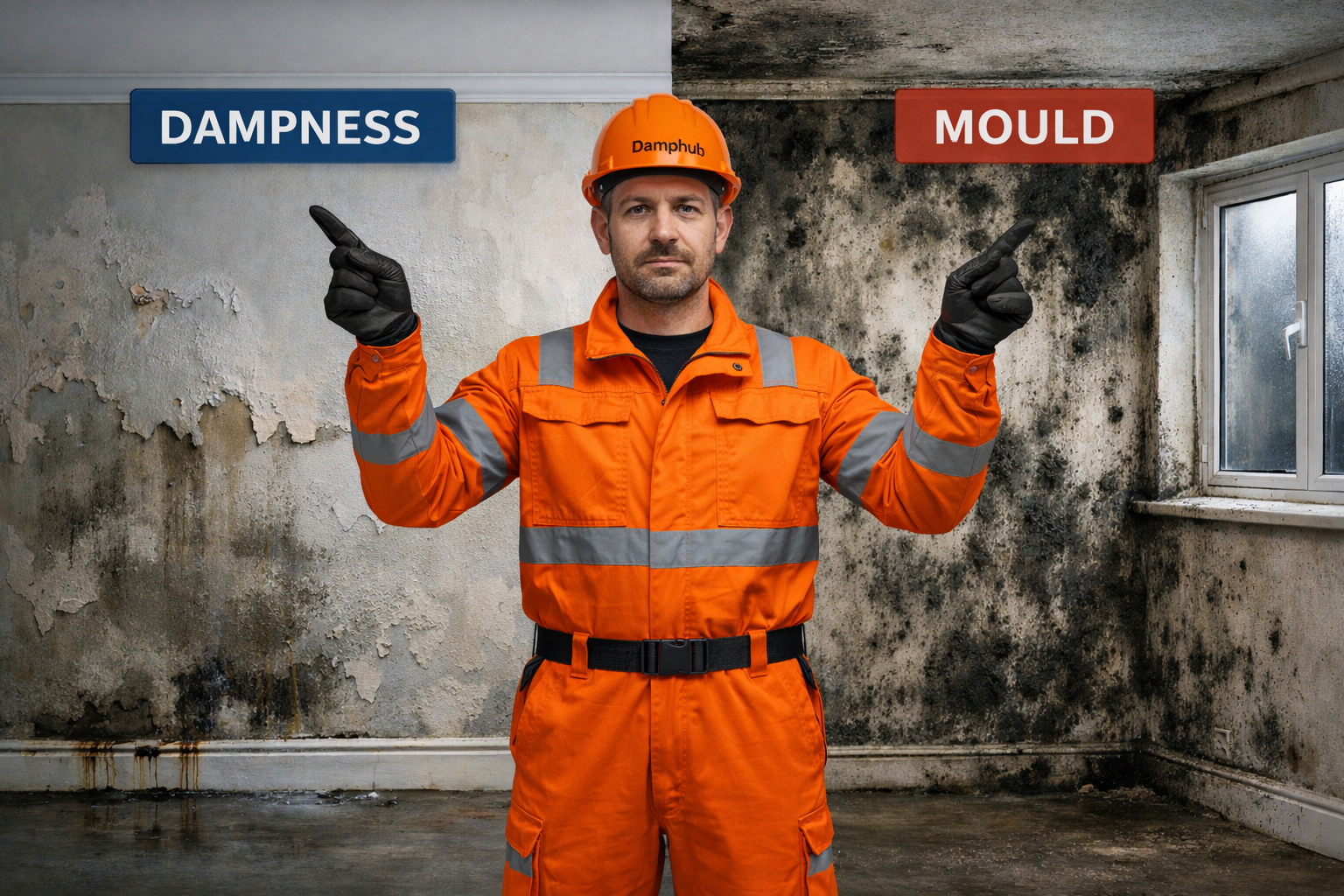
Most people get mixed up by the topic of damp vs mould. It’s easy to see why they often show up together. But here’s the thing: they’re not the same.
Damp is just extra moisture inside a building. Mould is alive. It’s a fungus that feeds on that moisture. Think of it this way: damp is the problem, mould is the symptom.
If you clean mould but ignore the damp, you’ll see it come back. And nobody wants that, right? Knowing the difference helps you fix things for good, not just temporarily.
What Is Damp in a Home?
Damp is basically water where it shouldn’t be. It’s not a material. Not a fungus. Just moisture hanging around walls, floors, or even the air.
Damp can sneak up slowly. Sometimes it hides behind wallpaper or under the floor. You might not notice it until paint bubbles or wallpaper peels. Some common causes:
- Leaky pipes or roofs
- Broken gutters or drainage issues
- Humidity inside the home
- Everyday habits like drying clothes indoors or cooking without ventilation
Spotting damp early can save a lot of headaches. Trust me, it’s much easier than dealing with it after it ruins your walls.
If you are dealing with mould, our other guide may be helpful: 10 Best Anti-Mould Paints For UK Homes
What About Mould?
Mould is a fungus that grows on damp surfaces. It’s alive, and it spreads. Tiny spores float around in the air, landing on wet surfaces and starting to grow.
You’ll often see it as black, green, or white patches. Common spots include:
- Walls and ceilings
- Furniture or fabrics
- Bathroom tiles or windowsills
It usually comes with a musty smell. Here’s the key:
- Damp can exist without mould.
- Mould can’t exist without damp.
So if you’re only cleaning mould, you’re missing the real culpritmoisture. The key idea is that mould only thrives where water lingers; no moisture, no growth.
So, stopping mould isn’t just about cleaning. It’s about controlling damp and airflow, too. Catch these causes early, and you can prevent a lot of frustration down the line.
How Damp Leads to Mould
Damp basically sets the stage for mould to thrive. Think of it like this: mould is the guest, but damp is the house it moves into. When walls, floors, or ceilings stay wet for days or weeks, spores find a perfect environment to grow.
Moisture creates the perfect home for mould. Without water, it just can’t survive indoors. Cleaning mould alone is like putting a bandage on a broken bone.
The fungus might disappear for a while, but it will return if the dampness stays. That’s why professionals always tackle damp first, then clean the mould. It’s the only way to stop it from coming back.
Types of Damp and How They Trigger Mould
Not all damp is the same. Each type can lead to mould in different ways.
Rising Damp
- Groundwater creeps up through the walls
- Usually appears near skirting boards
- It can cause mould at the bottom of the walls
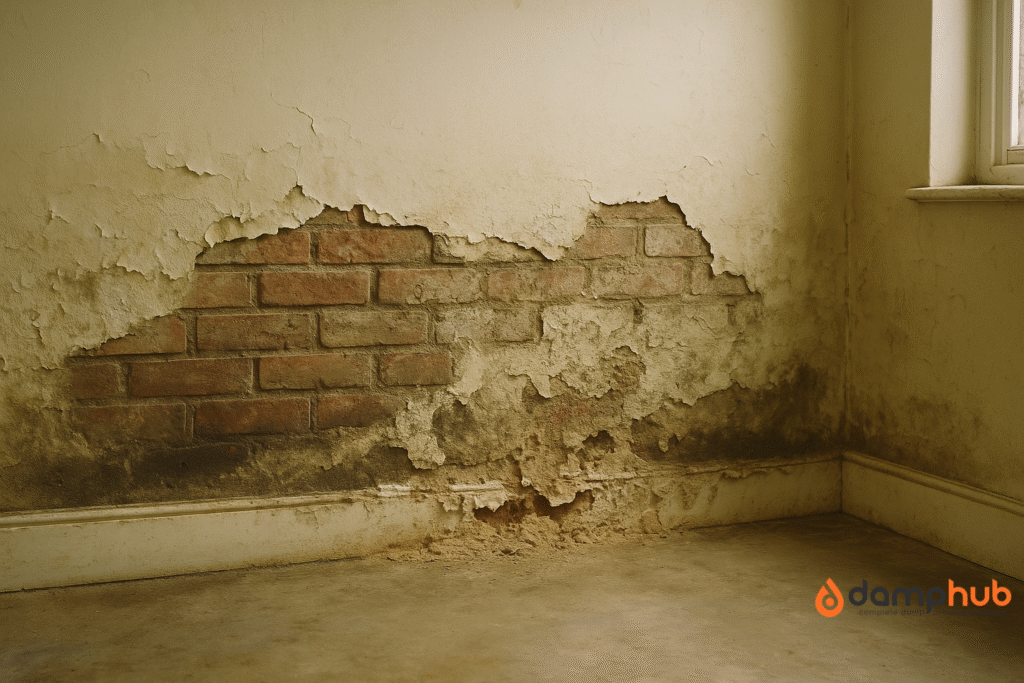
Penetrating Damp
- Water enters through walls, windows, or roofs
- Often caused by leaks or blocked gutters
- Mould usually appears in isolated spots
Condensation
- Happens when warm air meets cold surfaces
- The main cause of mould in most homes
- Creates constant surface moisture, perfect for fungal growth
Knowing the type of damp helps you pick the right fix. Otherwise, you’re just guessing and wasting time.
Rising damp often shows at the base of walls and can slowly creep upward, giving mould plenty of time to spread along skirting boards or behind furniture.
Penetrating damp usually happens in isolated spots where water finds a way through cracks or leaks, so mould might appear suddenly in one corner, making it tricky to spot early.
Still need help with mould? Explore our selection of 10 Best Mould Remover for Walls: Tried and Tested by Experts
Damp vs Mould: How They Look Different
Damp is often sneaky. It can hide behind walls, under floors, or in ceilings. You might not spot it without a careful check. Signs to watch for:
- Peeling or blistering paint
- Bubbling wallpaper
- Cold, clammy walls or floors
- Musty smell lingering in rooms
Mould, on the other hand, is easy to spot.
Dark patches, fuzzy growth, or discoloured surfaces are dead giveaways.
The problem? People focus on mould and ignore damp.
That delays proper treatment and lets damage get worse.
Damp vs Mould: What Causes Them?
Damp vs mould can come from different sources.
Structural Causes
- Leaky pipes
- Roof or wall damage
- Poor insulation
- Faulty gutters
Lifestyle Causes
- Drying clothes indoors
- Long, hot showers
- Cooking without ventilation
Mould itself only grows where it’s damp. Moisture is its life source. So yes, both building issues and daily habits matter. Ignoring either one can mean problems keep coming back.
How to Treat Damp vs Mould
Treatment is different for each.
Mould Treatment
- Clean affected surfaces with proper products
- Toss badly affected items
- Increase airflow to slow regrowth
Damp Treatment
- Fix leaks in plumbing, roofing, or walls
- Improve drainage around the property
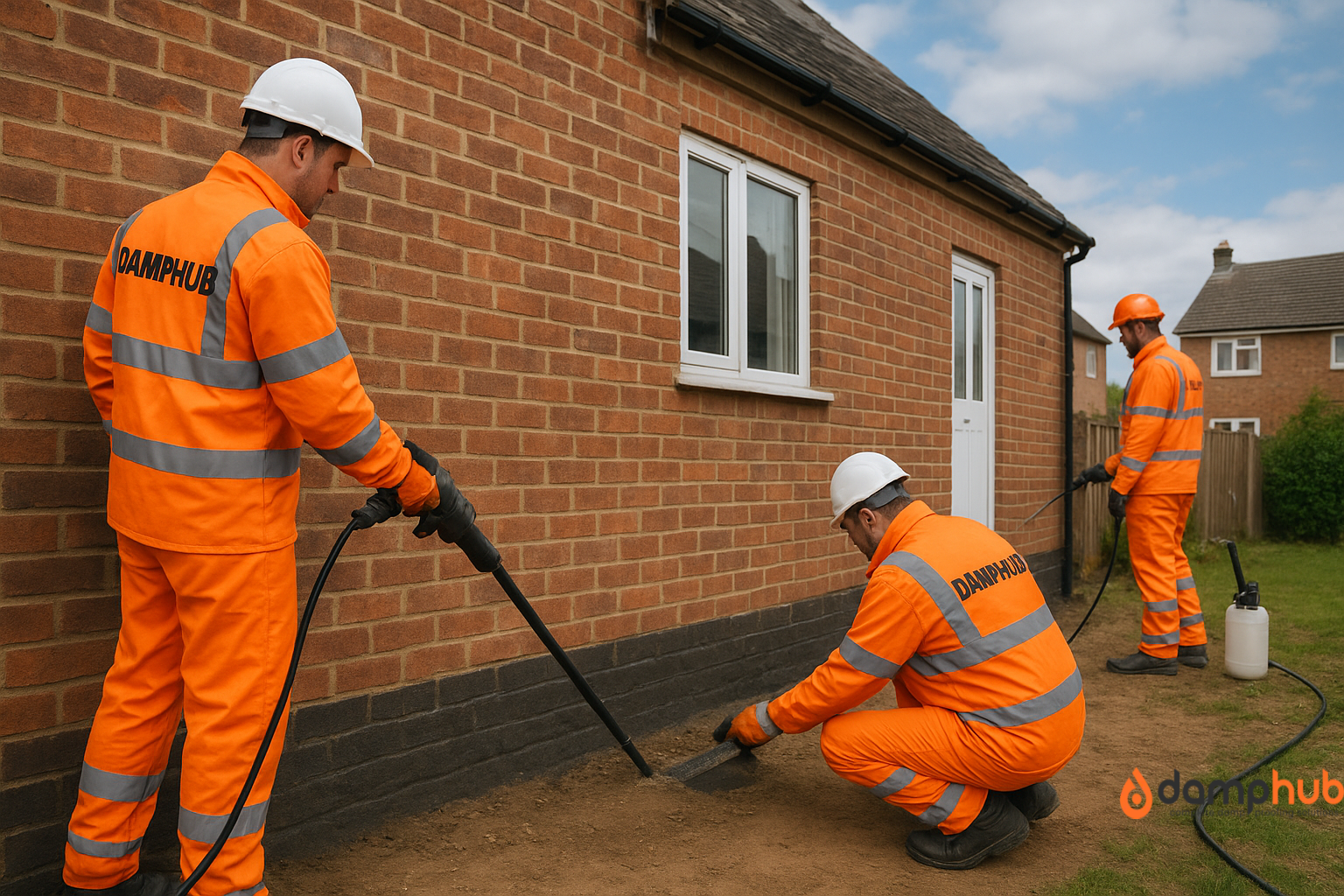
- Use damp-proofing systems
Big takeaway:
- Mould cleaning is mostly surface-level
- Damp-proofing addresses the root cause
Without tackling damp, mould is just going to return.

Why People Get Confused
Damp vs mould show up together, so it’s easy to mix them up. Mould is more visible and usually unpleasant, so we notice it first. Damp works quietly behind the scenes.
Additionally, the word “damp” is often used to describe any moisture-related issue. That leads to cleaning mould repeatedly without solving the real issue.
Signs You Shouldn’t Ignore
- Peeling or blistering paint (damp)
- Bubbling wallpaper (damp)
- Musty odour (mould)
- Dark patches on walls, ceilings, or fabrics (mould)
- Walls or floors that feel wet or cold (damp)
Catching these early makes treatment easier and cheaper. It also saves you from frustration later.
Want more helpful guides from our experts? Explore our 10 Best Mould Sprays In The UK 2025
Prevention Tips That Actually Work
- Repair leaking pipes, roofs, and gutters quickly
- Keep good ventilation in kitchens and bathrooms
- Use extractor fans when cooking or showering
- Avoid drying clothes indoors if possible
- Apply damp-proof coatings where needed
- Check walls, skirting boards, and ceilings regularly
Even small habits, such as opening a window while cooking, can make a significant difference. Consistency matters more than anything else.
Damp vs Mould: Quick Recap
Mould and damp are linked but not identical.
- Damp is excess moisture
- Mould is a fungus that needs damp to survive
Ignoring damp can harm your home’s structure. Ignoring mould can affect your health. The right approach:
- Find and fix the source of damp first
- Clean visible mould
- Take preventive steps to control moisture
Visible mould is just the symptom. Treat the damp, and the fungus problem usually disappears.