Rising damp is a very poorly understood and frequently misdiagnosed issue in domestic properties, particularly older dwellings
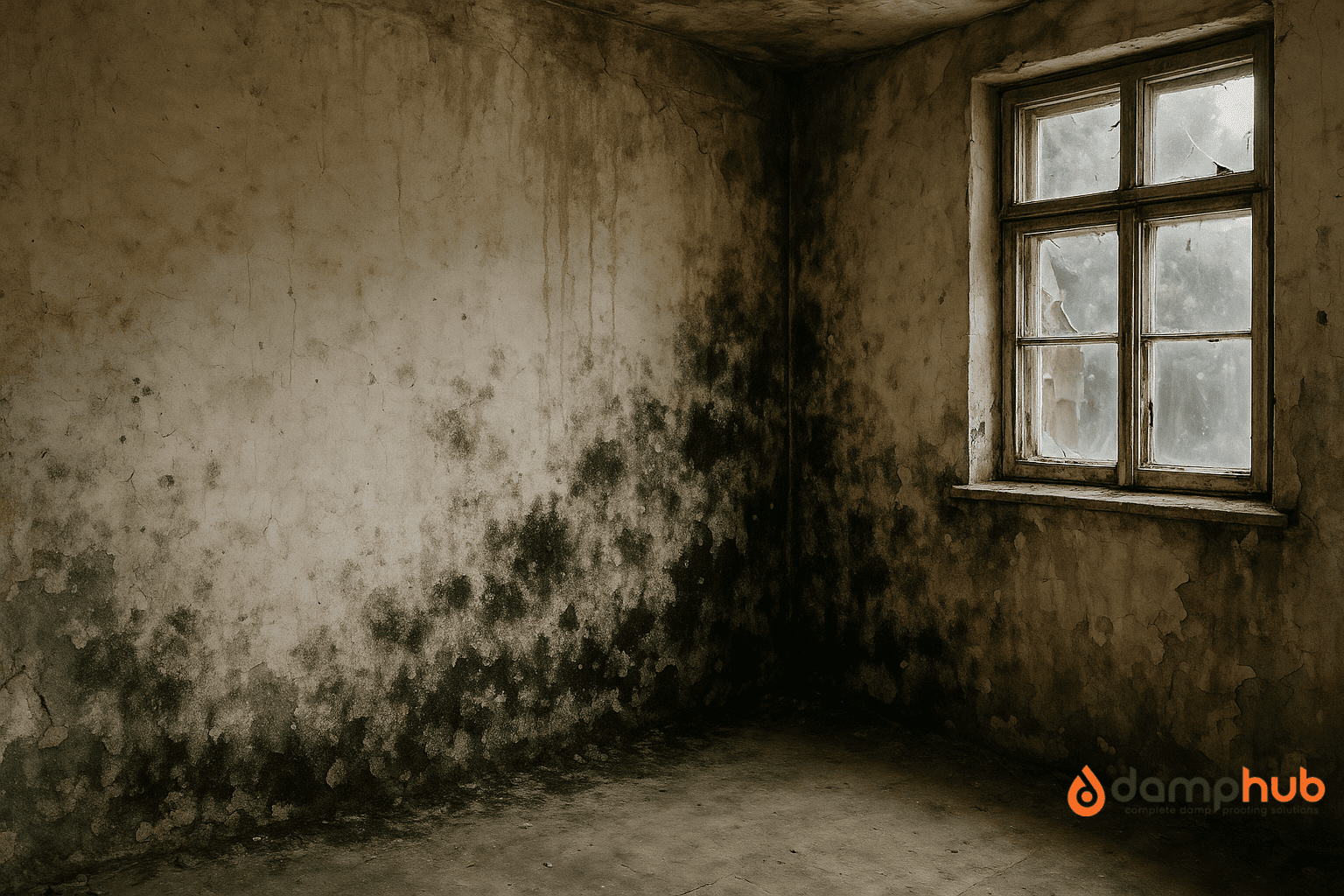
Most people in these homes might wonder, “What does rising damp look like?”
Knowing how to identify rising damp is of the utmost importance.
Why?
If left untreated, rising damp can cause plaster damage, rot timber, destroy decorations, and cause health issues through mould and poor air quality.
This guide sets out precisely what rising damp appears like, how to tell it from other types of moisture damage, and what to look out for.
We’ll discuss:
- Visual signs (with details)
- Common areas affected
- Misleading indicators and myths
- Rising damp and condensation or penetrating damp: the differences
- What to do next if you suspect it
1. What Is Rising Damp?
Rising damp occurs when ground water moves upwards through permeable materials such as bricks or mortar by capillary action.
Usually, buildings are equipped with a damp-proof course (DPC)—a horizontal barrier to prevent this water.
But if this DPC is non-existent, faulty, or bridged (e.g. by soil or render), water rises along the wall.
Typical locations:
- Internal ground-floor walls
- External lower walls
- Chimney breasts or alcoves
- Skirting boards and floor timbers
Good to Know:
Rising damp is not usually more than 1 metre (3.3 feet) above the floor level unless the material of the wall is particularly porous or the DPC has completely failed.
2. What Does Rising Damp Look Like? (What to Check)
Rising damp has quite specific visual signs, particularly at floor level. Identifying them early on can avoid structural and aesthetic damage.
👉 Must read: Is Rising Damp Dangerous
Most Popular Visual Indicators:
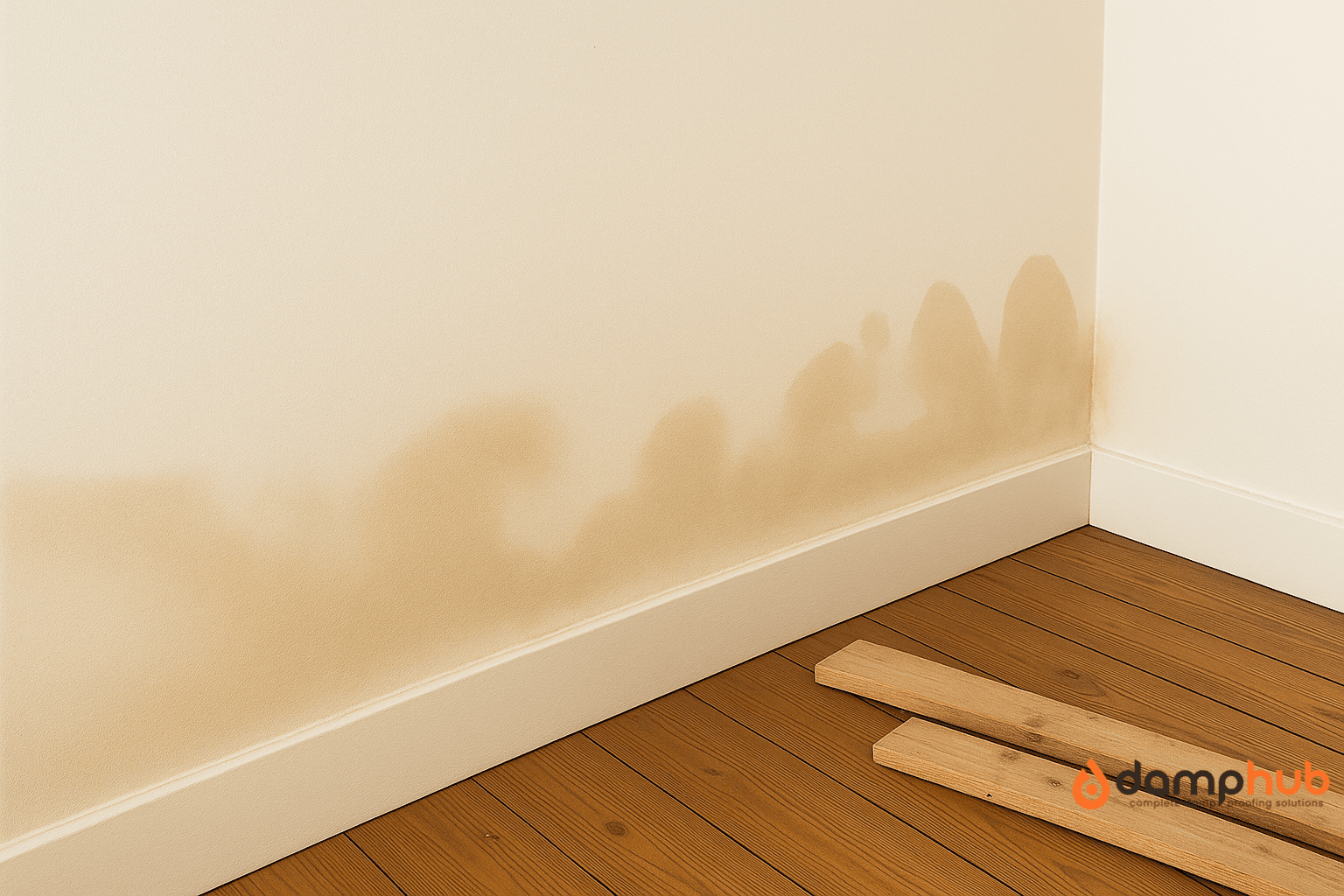
Tide Marks on Walls:
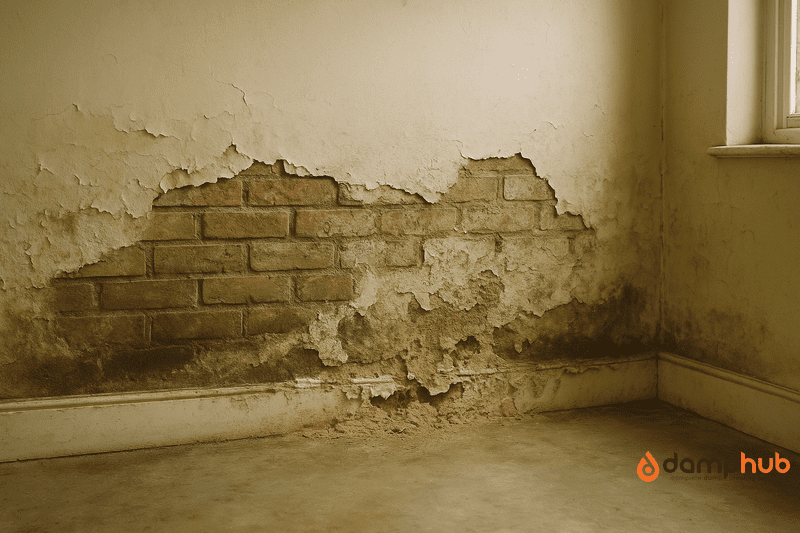
- Brown, yellow, or greyish horizontal marks.
- Typically found up to 1 metre high.
- Due to minerals and salts deposited by the drying out of water.
Peeling Paint or Wallpaper:
- Paint can bubble or flake at the bottom of walls.
- Wallpaper tends to become loose or curl at the edges.
Damp or Discoloured Plaster:
- Plaster is cold and damp to the touch.
- Dark stains can be seen through the paint.
Salt Efflorescence:
- White, powdery deposits on the wall surface.
- Due to salts brought up from the ground and deposited as evaporation causes moisture to leave.
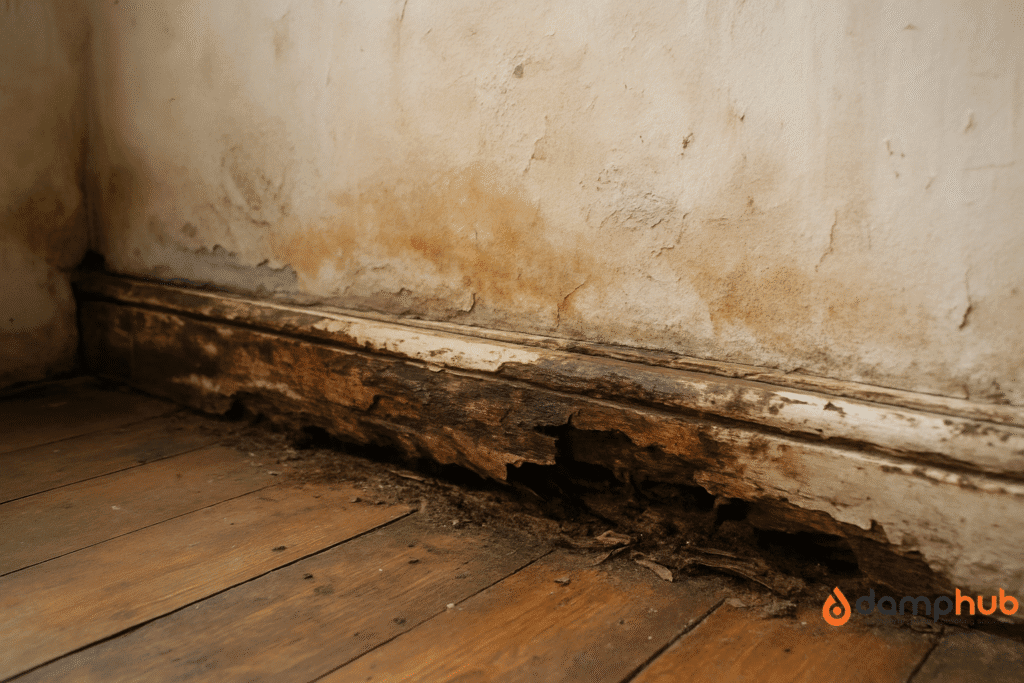
Rotting or Warped Skirting Boards:
- Wood in areas of dampness can display rot or cracking.
- It can be a sign of long-term issues of moisture.
Mould or Mildew Near Floor Level:
- Black, green, or white spots in corners or under furniture.
- Less typical than condensation mould, but still a possibility.
Musty Smell:
- Even before there is visible damage, rising damp areas will give off a lingering earthy smell.
👉 Also read: How to Treat Rising Damp: A Complete Guide for UK Homeowners
3. Rising Damp vs Other Types of Damp (Side-by-Side Comparison)
Identifying the right type of damp is essential.
Many rising damp cases turn out to be condensation or penetrating damp, which require very different solutions.
| Feature | Rising Damp | Penetrating Damp | Condensation |
|---|---|---|---|
| Location | Ground floor, lower walls | Any height, usually near ceilings, chimneys, or leaks | Windows, bathrooms, kitchens, and cold surfaces |
| Height | Typically up to 1 metre | Can appear at any height | Often around windows or corners |
| Source | Moisture from ground | Rainwater, leaks, and gutter issues | Indoor humidity and poor airflow |
| Signs | Tide marks, salts, decayed skirting | Isolated damp patches, musty walls | Mould, water droplets, musty smell |
| Seasonal? | Year-round | Worsens with rain | Worse in cold months |
Tip: A damp surveyor can test moisture levels and identify the correct source using meters and thermal imaging.
4. Examples of Rising Damp in Real Homes
Below are actual-life descriptions of how rising damp looks in different home environments:
Victorian Terraced House:
- The living room has peeling wallpaper 40 cm above the skirting.
- White salt deposits are appearing below the window sill.
- Damp, musty odour near the chimney breast.
Ground-Floor Bedroom:
- Tide marks are evident behind a big wardrobe.
- Plaster is soft to the touch and crumbling in patches.
- Skirting board paint is cracking and peeling away in sheets.
External Wall:
- Flaking brickwork at the base of the wall.
- Lack of black mould under air bricks.
- Evidence of erosion and staining of mortar along the damp course level.
Good to Know:
Rising damp occurs more frequently in pre-1950s houses with no original DPC or have one constructed from materials that deteriorate over time.
5. What Rising Damp Does Not Look Like (Common Misdiagnoses)
Homeowners frequently mistake other issues for rising damp.
Here is what rising damp does not resemble:
- Black mould in the top corners of rooms – typically condensation
- Damp near the roof or ceiling – typically a roof or pipe leak
- Wet spots near windows – probably condensation or deteriorated seals
- Damp behind appliances – could be plumbing leaks
Tip: Don’t look for visual signs in isolation. Employ a professional moisture meter or have a competent PCA damp surveyor visit to make an accurate diagnosis.
👉 Also read: How Much Does Rising Damp Treatment Cost?
6. How to Verify it’s Rising Damp
Easy Tests and Indications:
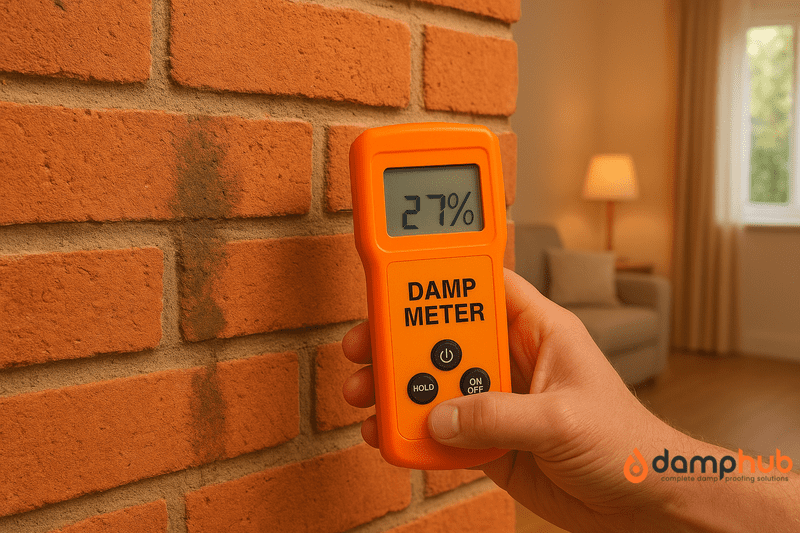
- Take a moisture meter on the affected walls and compare with higher up the wall.
- Inspect skirting boards and floor edges for dampness and rot.
- Tap the wall – the areas of rising damp usually sound hollow because of the plaster detachment.
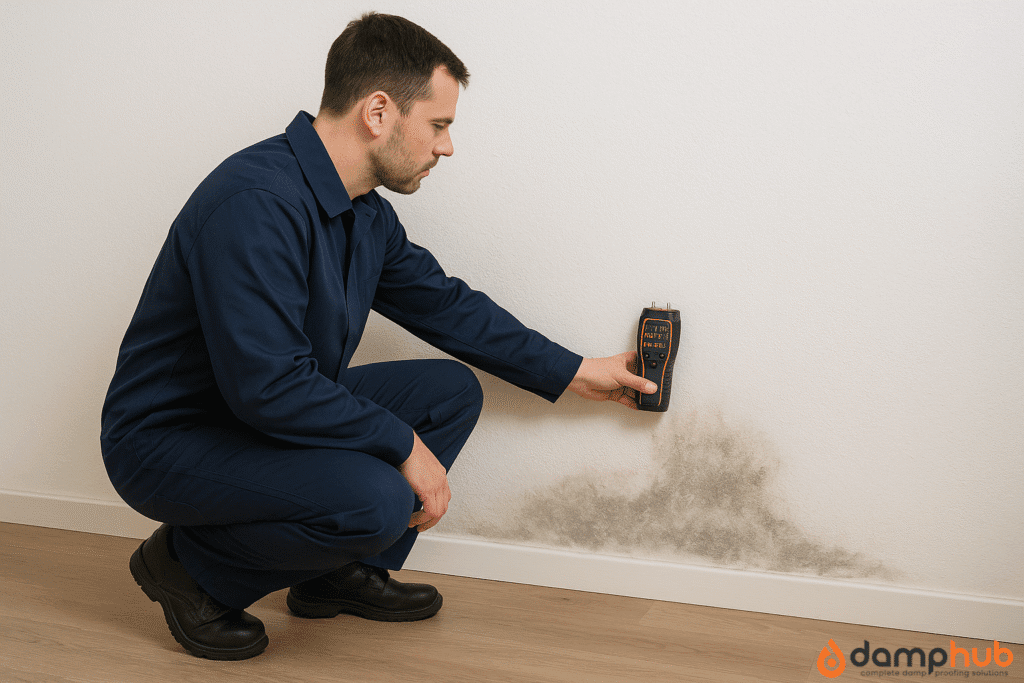
Professional Survey Includes:
- Detailed moisture mapping
- Salt analysis (to identify ground salts)
- External walls and DPC condition inspection
- Application of the aluminium carbide test (for precise moisture content)
7. What Makes Rising Damp Show Up
To understand the root cause is to address the issue properly:
- Failed or absent damp-proof course (DPC)
- Bridged DPC (e.g. by increased floor levels, render, or internal plaster)
- Obstructed air bricks diminishing wall ventilation
- Porous or broken masonry where moisture can penetrate
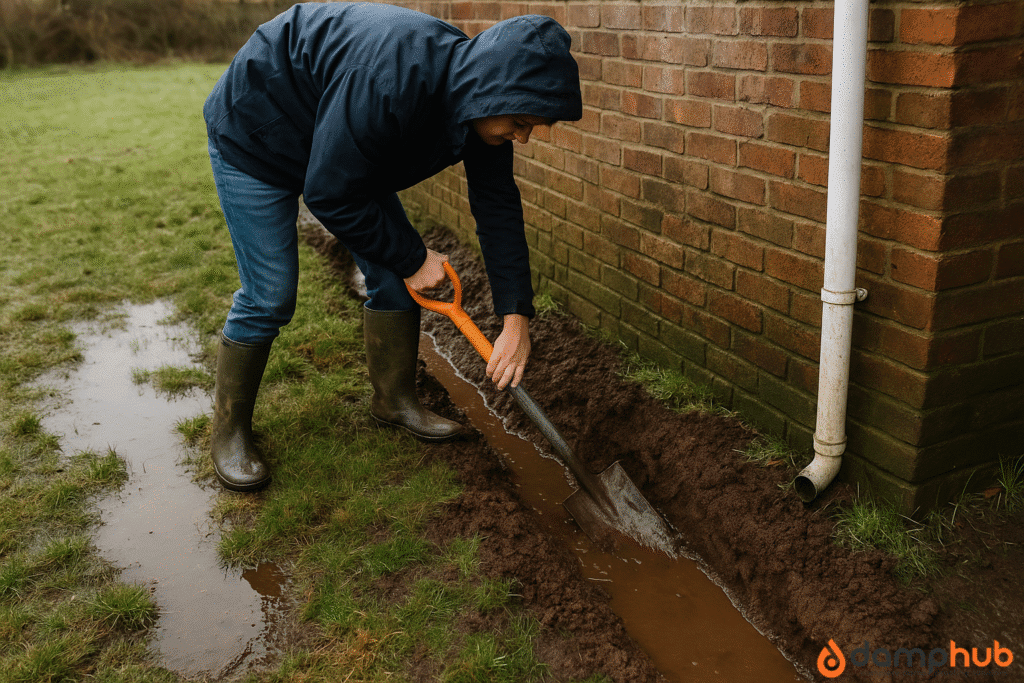
- Impeded drainage or water accumulation at the foot of walls
Prevention Tip:
Ensure soil, decking, or paths are at least 150mm beneath the inner floor level to prevent DPC bridging.
8. What to Do If You See Rising Damp
Should the symptoms resemble rising damp, do the following:
Step-by-Step Action Plan:
- Obvious causes to check for:
- Soil or debris over air bricks or bridging the DPC.
- Blocked gutters or overflowing downpipes.
- Clear affected plaster and wall coverings:
- Strip back to evaluate full damage.
- Seek the advice of a qualified damp surveyor:
- Get a moisture report and diagnosis.
- Implement a suitable solution:
- Chemical DPC injection (for new homes)
- Damp-proof membranes or tanking (for older buildings)
- Replaster with salt-resistant render
- Drainage and ventilation are to be improved:
- Print to slope away from the building.
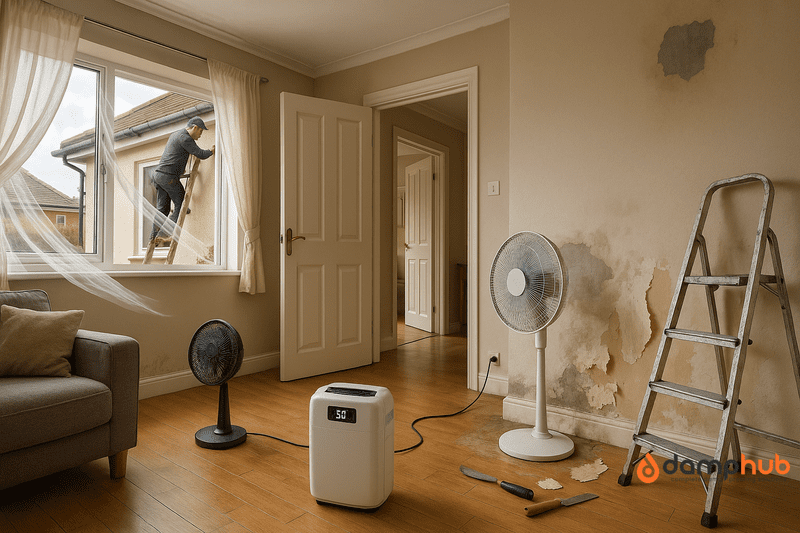
- Add vents or fit a dehumidifier.
Conclusion
Rising damp can be quietly insidious at first, but it always shows obvious signs for the trained eye:
Flaking or peeling paint near the base of walls, Tide marks and salt lines up to 1 metre, Softer or crumbling plaster, rotting skirting boards, Musty smells that linger at ground-floor level.
Identifying these early on could save you thousands on repair bills down the line.
If you have an old house, rental properties, or simply want to be stress-free, it’s worth learning the signs of rising damp and acting quickly.
If you’re unsure, don’t guess—book a professional damp survey and get a clear picture of the problem before committing to treatment.
Identifying rising damp correctly is the first step to restoring a healthy, dry, and long-lasting home.