Dealing with a damp home in the UK feels like a part-time job you never applied for. You wake up, grab a towel, and wipe down the windowsills. Again. It’s a cycle of moisture, cold air, and that lingering worry about black mould in the corner of the wardrobe.
To break that cycle, you need to understand how different products actually tackle the physics of your home. You don’t need a lecture; you need to know which tool fits your specific headache.
Here is a breakdown of the main categories of condensation control products. Each works differently. Some remove the water, some move the air, and some change the temperature of your walls.
1. Dehumidifiers: The Active Water Catchers
A dehumidifier is usually the first thing people buy. It’s a box on wheels that you plug into the wall. It doesn’t fix the reason your house is damp, but it deals with the symptoms immediately.
How they work: Most UK dehumidifiers use a compressor. Think of it like a tiny fridge. It pulls air over cold metal coils. When the warm, damp air hits those coils, the water turns into liquid—just like breath on a cold window—and drips into a tank.
There are also desiccant models. These use a chemical wheel that “drinks” the moisture from the air. They are less common for living rooms because they use more electricity, but they are great for cold conservatories or garages where a compressor model might struggle to work.
What to look for: When you start your search, look for the “extraction rate” (how many litres it can pull in 24 hours). Also, check the tank size. If you buy a tiny one, you’ll be waking up at 3:00 AM to empty it.
2. PIV Systems: The “Fresh Air” Pushers
Positive Input Ventilation (PIV) is the professional’s choice for a whole-house fix. If you have a loft, this is likely your best bet.
How they work: Imagine your house is full of heavy, stagnant, wet air. A PIV unit sits in your loft and gently pushes fresh, filtered air down into your landing. This creates a tiny bit of pressure. It’s not enough to feel like a breeze, but it’s enough to nudge the old, damp air out through your floorboards, window vents, and chimneys.
It stops the air from sitting still. Moving air doesn’t turn into condensation nearly as easily as still air. It’s a “fit and forget” system that runs quietly in the background 365 days a year.
What to look for: Look for units with a “temperater” or heater. Some models warm the air slightly before it enters your hallway so you don’t feel a cold draught in January.
3. Extractor Fans: The Source Killers
If your bathroom stays steamy for twenty minutes after a shower, your fan is failing you. This is where most house-wide damp problems start.
How they work: They are essentially vacuums for wet air.
- Axial fans are the standard ones. Great for a quick exit through a wall.
- Centrifugal fans are for the tough jobs. If your fan has to push air through a long pipe in the ceiling to reach the outside, you need the extra “shove” that a centrifugal motor provides.
- dMEV (Continuous) fans are the modern standard. They never turn off. They run at a very low level all the time, ensuring that even when you aren’t showering, your bathroom is being ventilated.
What to look for: Check the “litres per second” (L/s) rating. Building regs usually require at least 15L/s for a bathroom. If you want peace and quiet, look for a “silent” model under 25 decibels.

4. Anti-Condensation Paint: The Thermal Barrier
Sometimes, a wall is just too cold. No matter how much you ventilate, that north-facing corner stays freezing, and water settles there.
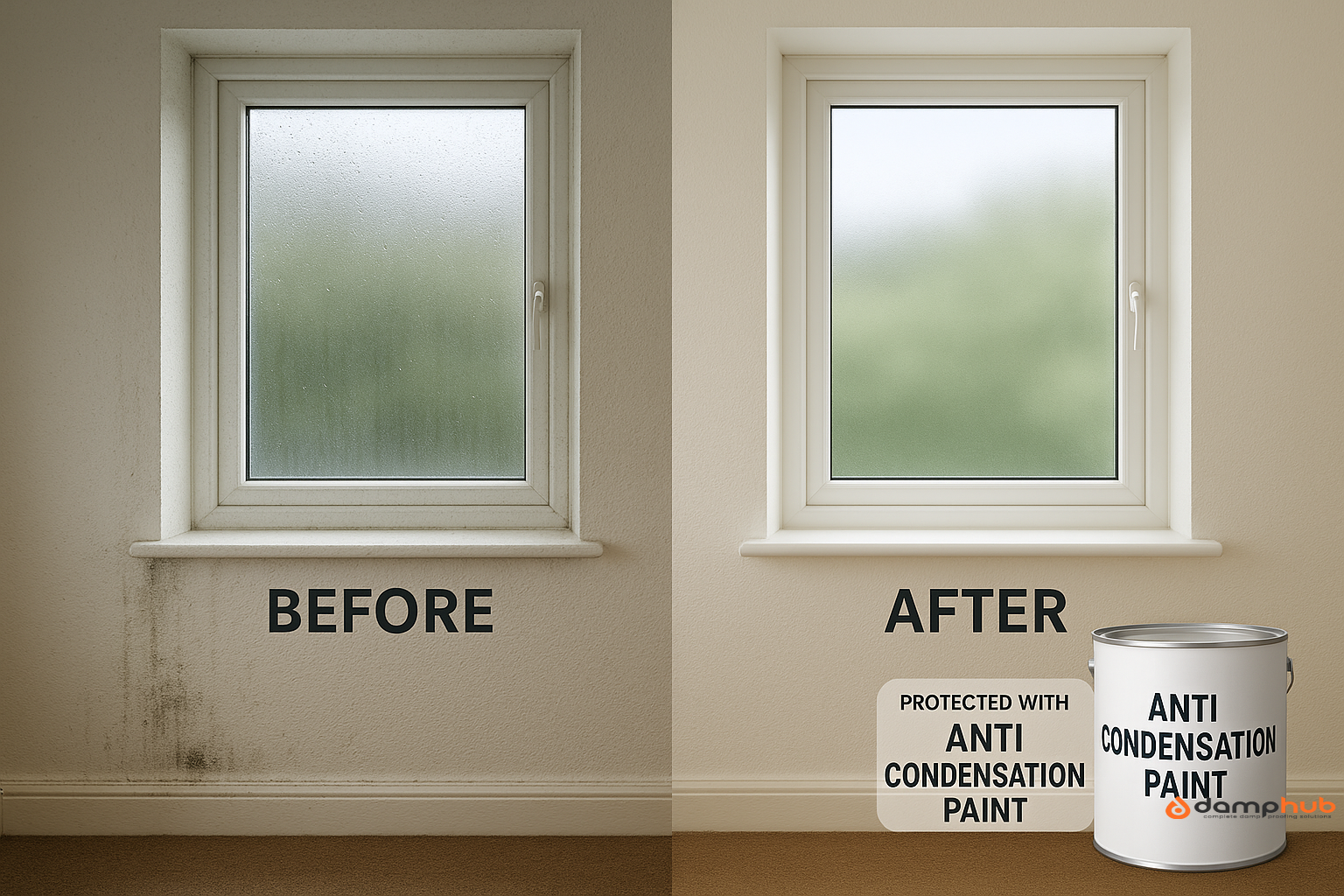
How it works: This isn’t just thick paint. It contains microscopic glass bubbles. These bubbles act as a thin layer of insulation. When you paint this on a cold wall, it raises the surface temperature. It makes the wall “feel” warmer to the air. If the wall stays warm, the moisture stays in the air as a gas rather than turning into those annoying drips that lead to mould.
What to look for: Search for “thermal” or “insulating” paint. It’s best used on external walls or in the corners of bedrooms where furniture blocks the airflow.
5. MVHR: The High-Tech Exchange
Mechanical Ventilation with Heat Recovery (MVHR) is for the serious renovator. It’s a big project, but it’s the most efficient way to live.
How it works: It’s a system of pipes that goes into every room. It sucks the wet air out of the kitchen and bathroom, but it doesn’t just throw it away. It passes that air through a heat exchanger to “steal” the warmth. It then uses that warmth to heat up fresh air coming in from outside. You get a dry house and a fresh breeze, but you don’t lose the heat you’ve paid for.
What to look for: This is usually for people doing a full house renovation. It’s expensive to install but incredibly cheap to run long-term.
Which path should you take?
To find the best products for your home, start by identifying your biggest problem:
- Is it just one room? Look for a high-quality Dehumidifier.
- Is the whole house crying? Look for a PIV System.
- Is the bathroom a sauna? You need a more powerful Extractor Fan.
- Is one specific corner always mouldy? Try Anti-Condensation Paint.
By focusing on these categories, you can narrow down the hundreds of gadgets on the market to the three or four that actually matter for your specific walls. Once you have the right category, check the energy ratings and the noise levels to find your perfect match.
Best Condensation Control Products: Frequent Questions Answered

Which companies offer professional condensation control services near me?
For local help, you should look for members of the Property Care Association (PCA). They are the trade body for damp specialists in the UK.
Companies like Kenwood PLC, Peter Cox, and Rentokil Property Care operate nationwide and have local branches in most major towns.
Using a PCA-registered firm ensures the surveyor is qualified to tell the difference between simple condensation and more serious rising damp.
Where can I buy effective condensation control solutions for my property?
If you are looking for a DIY fix, major retailers like Screwfix, Toolstation, and B&Q stock a wide range of extractor fans and anti-mould paints.
For more specialist kit—like PIV systems or high-end dehumidifiers—online specialists like EnviroVent, Meaco, or AirAndWater are often better. They tend to carry the professional-grade models you won’t always find on the high street.
Who supplies reliable condensation control insulation for commercial buildings?
Commercial properties often require “anti-condensation” roofing sheets or specialised insulation boards. Companies like Kingspan and Rockwool are the industry leaders here.
For steel-framed buildings or warehouses, look for suppliers of Dripstop membranes or Celotex PIR boards, which are designed to handle the larger volumes of moisture found in industrial spaces.
What condensation control products come with installation services in the UK?
If you don’t want to mess around with wiring or lofts, EnviroVent and Nuaire offer full “supply and fit” packages for their PIV systems and extractor fans. This is a great route if you want a long-term guarantee.
Additionally, many local damp-proofing companies will sell you the product and include the labour as part of a fixed-price quote.
Which brands provide long-lasting condensation control membranes for walls?
When you are dealing with damp walls that need a physical barrier, brands like Newton Waterproofing and Oldroyd are the names to know. They produce studded membranes that you fix to the wall before plastering over them.
This creates an air gap that allows the wall to breathe while keeping your interior wallpaper or paint bone dry.
Where can I find specialist condensation control treatments for damp problems?
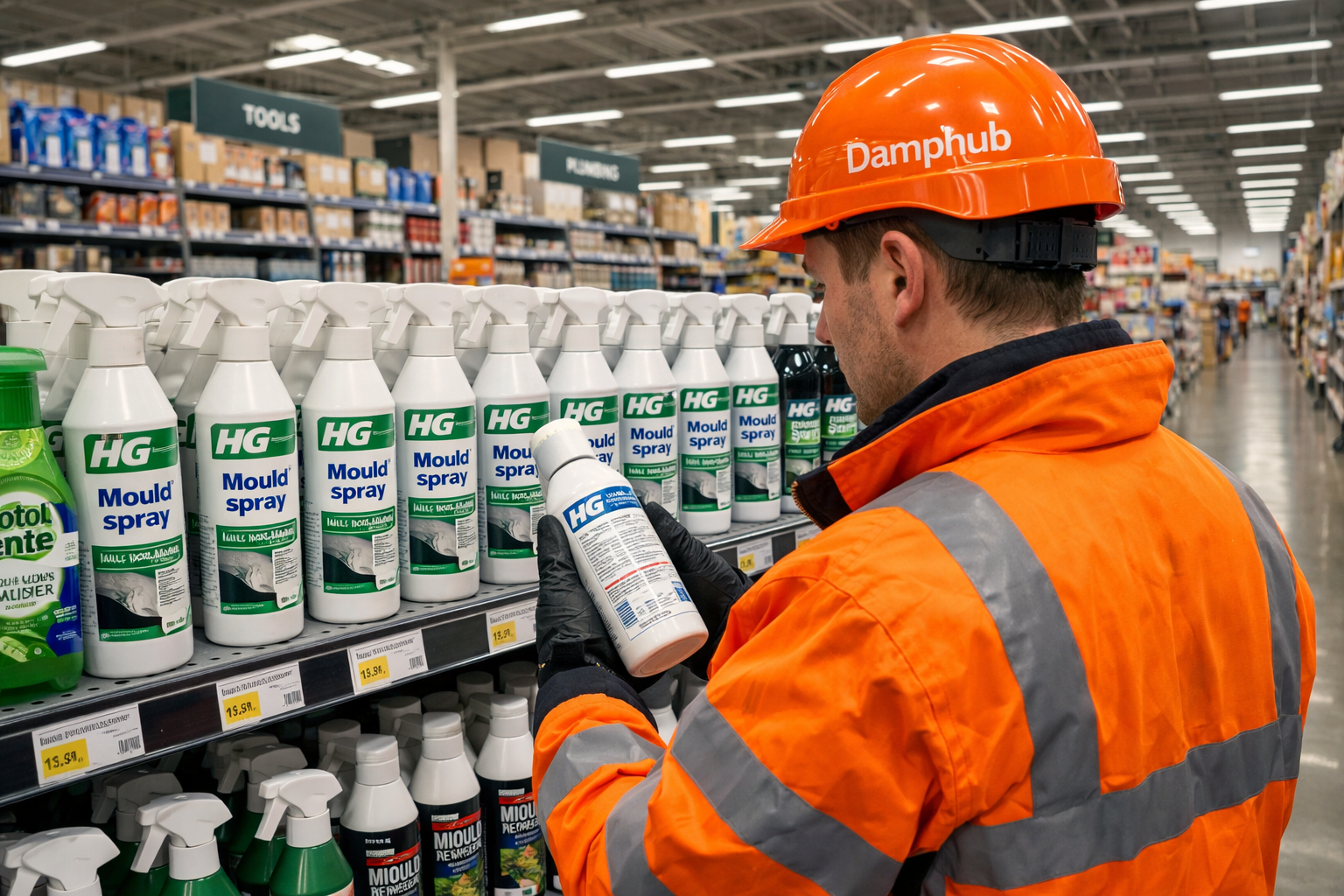
For persistent mould, look for “biocidal” washes from brands like HG or Ronseal. If the problem is deeper, specialist merchants like Permagard or Property Repair Systems sell professional-grade resins and thermal linings that go far beyond what you’ll find in a standard supermarket cleaning aisle.
What are the top-rated condensation control products for lofts and roofs?
The Nuaire Drimaster-Eco is widely considered the gold standard for loft-based PIV systems in the UK. For the roof structure itself, look into LapVents. These are clever little plastic wedges you can DIY-install between your roof felt to increase airflow in the loft without having to climb onto the roof and move tiles.
Who offers custom condensation control systems for industrial facilities?
Industrial moisture control is a different beast. Companies like Munters and Calorex specialise in large-scale desiccant dehumidification and HVAC systems. They build custom rigs for factories, swimming pools, and food processing plants where moisture levels have to be kept at a specific percentage 24/7.
Where can I get a free quote for condensation control?
Most large national firms like Peter Cox or Heritage Damp Proofing offer “no-obligation” surveys, though some may charge a fee if you are a landlord or in the middle of a house purchase. For a truly free starting point, many local “handyman” services or electricians will give you a quote for installing an extractor fan or PIV unit if you’ve already identified the product you want.